
Net profit of 19 listed banks is likely to decline by 4 per cent year-on-year (Y-o-Y) for the quarter ended March (Q4FY25) mainly due to pressure on net interest margins (NIM) as a result of rate cut by the Reserve Bank of India (RBI), according to analysts' estimates. Additionally, loan growth is expected to further slowdown amid low demand in certain secured products, stress in the unsecured segment, and a high cost to deposit (CD) ratio across the system.

'It is not looking at valuation, but investment, growth and ultimately better profit for stakeholders.'

Banks and NBFCs are launching festival offers, including lower loan rates, cashback, EMI schemes and GST-linked benefits to tap rising demand ahead of Diwali

Disappointing, wanted to go out on a high: Emotional Devine bids farewell to game

The best course for the government at this time would be to tighten the seat belt a little more, without compromising on its investments in creating better infrastructure and giving a push to privatisation, points out A K Bhattacharya.

The Reserve Bank of India's recent decision that require banks and non-bank financial institutions to allocate more capital against unsecured consumer credit will constrain loan growth in the segment, according to a report. This should also reduce the potential for the rising appetite for such lending to weaken financial system stability, a report by Fitch Ratings said on Thursday. "We generally view the tightening as a credit-positive effort by authorities to control emergent systemic risks posed by consumer credit, which has increased rapidly in recent years off a relatively low base," it said.

The ideal time to invest in sector funds, is during a downturn so that investors can capitalise on a turnaround in 1.5 to 2 years.

Reserve Bank Governor Sanjay Malhotra on Wednesday exhorted the fledgling fintech ecosystem to focus on the underserved sections of the society to deepen financial inclusion. Speaking at the annual Global Fintech Fest in Mumbai, Malhotra accepted that serving the "privileged" will be a lucrative business, but urged the smaller companies to focus on the underserved.

About 85 per cent of the digital payment transactions take place through UPI in India, and the country can be a case study in inclusive, secure, and scalable Digital Public Platforms (DPPs), Reserve Bank Governor Sanjay Malhotra has said. He was speaking at a "High-Level Dialogue on Forging Economic Resilience through Digital Public Platforms" organised by RBI on the sidelines of the Annual Meetings of the World Bank and International Monetary Fund in Washington, DC on Tuesday.

'Bank has enabling provision to raise capital up to Rs 7,500 crore over a longer period of time.'

Lower rates effectively increase disposable income, strengthen purchasing capacity, and support broader consumption growth.

The crisis may not be as visible this time, but the stakes are just as high, points out Rajeswari Sengupta.

The exemption of individual life and health insurance premiums from the Goods and Services Tax (GST) enables the insurance industry to make products affordable and attractive, said Ajay Seth, chairman of Insurance Regulatory and Development Authority of India (Irdai) at the Business Standard BFSI Insight Summit 2025.

The gold loan portfolio of banks continued to show strong off-take with 76 per cent year-on-year (Y-o-Y) growth in January 2025 amid moderation in retail credit - especially in the unsecured credit segment - following increase in risk weights in November 2023. The gold loan pool had grown 17.4 per cent Y-o-Y in January 2024.

Public-sector banks (PSBs) are attracting the attention of investors and the PSU Bank Index has gained nearly 10 per cent in the past month. PSBs have seen return on assets (RoA) climbing to 1 per cent in 2024-2025 (FY25) and margins are believed to have moved up further in the first half of this financial year (H1FY26) with asset quality remaining stable.

Young earners with high incomes and few responsibilities can save more than 30 per cent, while those with low salaries and high expenses may save less.

They shied away due to concerns over asset quality and a rise in NPAs.

The best way for India to prepare is by preserving and strengthening the RBI's hard-won credibility, point out Rajeswari Sengupta and Vaishali Garga.

'If she hadn't left Bangladesh, the militants had planned on killing her'

Equity benchmarks face a key test as investors weigh consumption revival hopes against tariff pressures and weak earnings. Amidst this, HSBC has outlined tailwinds and risks that could cap gains.

Credit card spending reached Rs 2 trillion in October, a 14.5 per cent rise from September, largely driven by festival season purchases. However, the volume of outstanding credit cards increased only marginally during the same period. The spike in spending comes at a time when nearly all major credit card issuers are calibrating their growth in the segment due to visible signs of stress.

Adani Enterprises' subsidiary Kutch Copper (KCL) and Australian Securities Exchange-listed Caravel Minerals on Thursday signed a non-binding memorandum of understanding (MoU) for collaboration on the Caravel Copper Project in Western Australia's Murchison region, for an undisclosed amount, according to a joint statement.

Banks recorded a higher growth year-on-year (Y-o-Y) in raising deposits during the second quarter of financial year 2025 (Q2FY25) compared to Q1FY25, owing to intensified efforts to raise liabilities by offering higher rates and innovative schemes.

Nearly 96 per cent of new applicants will benefit from this simplified approval route.

Finance Minister Nirmala Sitharaman on Tuesday allayed apprehension that privatisation of state-owned banks would hurt financial inclusion and national interest. She said the bank nationalisation done in 1969 has not yielded the desired result as far as financial inclusion was concerned.

The GenZ violence that engulfed Nepal is not only against nepo-babies -- its anger is broader and riddled with contradictions, making it difficult for interim PM Sushila Karki, points out Aditi Phadnis.

Here's unlocking the real story behind your EPF's 8.25% interest and what it truly means for your retirement kitty.
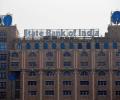
Country's largest lender State Bank of India (SBI) is looking to be among 10 top global banks in market capitalisation terms in the next five years, chairman CS Setty said on Wednesday. "The scope for value creation for the stakeholders is potentially very high. So the larger ambition is if the market supports whether we can be part of the top 10 global banks in terms of the market capitalisation (five years)," he said after listing of shares issued under Qualified Institutional Placement (QIP) at NSE.

With the price of gold entering a strong bull run, gold-loan non-banking financial companies (NBFCs) are under the spotlight, even though their performance is not directly linked to gold price. Muthoot Finance outperformed in the April-June quarter (Q1) of 2025-26 (FY26), with its assets under management (AUM) growing 10 per cent quarter-on-quarter (Q-o-Q) and 42 per cent year-on-year (Y-o-Y), an improvement of 88 basis points (bps) Q-o-Q in net interest margin (NIM), and a fall in credit cost. Gold AUM rose 40 per cent Y-o-Y and 10 per cent Q-o-Q. The company recorded recoveries of 350 crore, including 100 crore from an asset reconstruction company (ARC), resulting in a 100-bp Q-o-Q yield increase.

Rana said she had made a "note" on September 27 where she had drawn the World Cup and inscribed that India wold win the trophy this time around.

Fitch Ratings on Monday affirmed India's sovereign rating at 'BBB-', with a stable outlook, saying a strong record of delivering growth and improving fiscal credibility will drive improvements in structural metrics. "India's ratings are supported by its robust growth and solid external finances," Fitch said, as it forecast GDP growth of 6.5 per cent in the fiscal year ending March 2026 (FY26), unchanged from FY25, and well above the 'BBB' median of 2.5 per cent.

Credit card spending in September recorded strong growth of 25 per cent year-on-year (Y-o-Y), marking the highest increase in six months. Even as many banks saw higher slippages during the July-September quarter of 2024-25, spending growth exceeded 20 per cent for the first time since February. According to the latest data released by the Reserve Bank of India (RBI), September spending reached Rs 1.76 trillion, compared to Rs 1.42 trillion in the same period a year ago. In August 2024, credit card spending was Rs 1.68 trillion.

Indian all-rounder Deepti Sharma was crowned Player of the Tournament in India's maiden ICC Women's World Cup triumph, says she still cannot believe she bowled the title-winning delivery.

The Reserve Bank of India's (RBI) Monetary Policy Committee's (MPC) decision to cut the repo rate by 50 basis points (bps) to 5.5% was contrary to the expectations of many economists. Firstly, most of the economists expected the MPC to cut the repo rate by 25 bps citing the weakening of inflation, prospects of economic growth, geopolitical uncertainty and comfortable system liquidity.

'Reinvention is not a hugely difficult task. With technology as available today, you can reinvent yourself pretty quickly.'
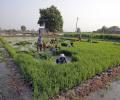
'They are totally disconnected with farm activities which their families have been involved in for years.'

With rising disposable incomes in cities beyond metros, the penetration of credit cards - and consequently, credit card spending - is growing at a much faster pace than in traditional metro cities, primarily driven by e-commerce spending.

'Raising the entire amount in one go may not be prudent, given the market dynamics.'

The next generation GST reforms would 'absolutely' set an economy open and transparent with further reduction in compliance burden and benefiting small businesses, Union Finance Minister Nirmala Sitharaman said on Tuesday.

Use these loans to meet emergency needs, and not to fund holidays or luxury purchases.
